Kerala's Festivals & Culture: A Year-Round Celebration
· by LiveKerala Editorial
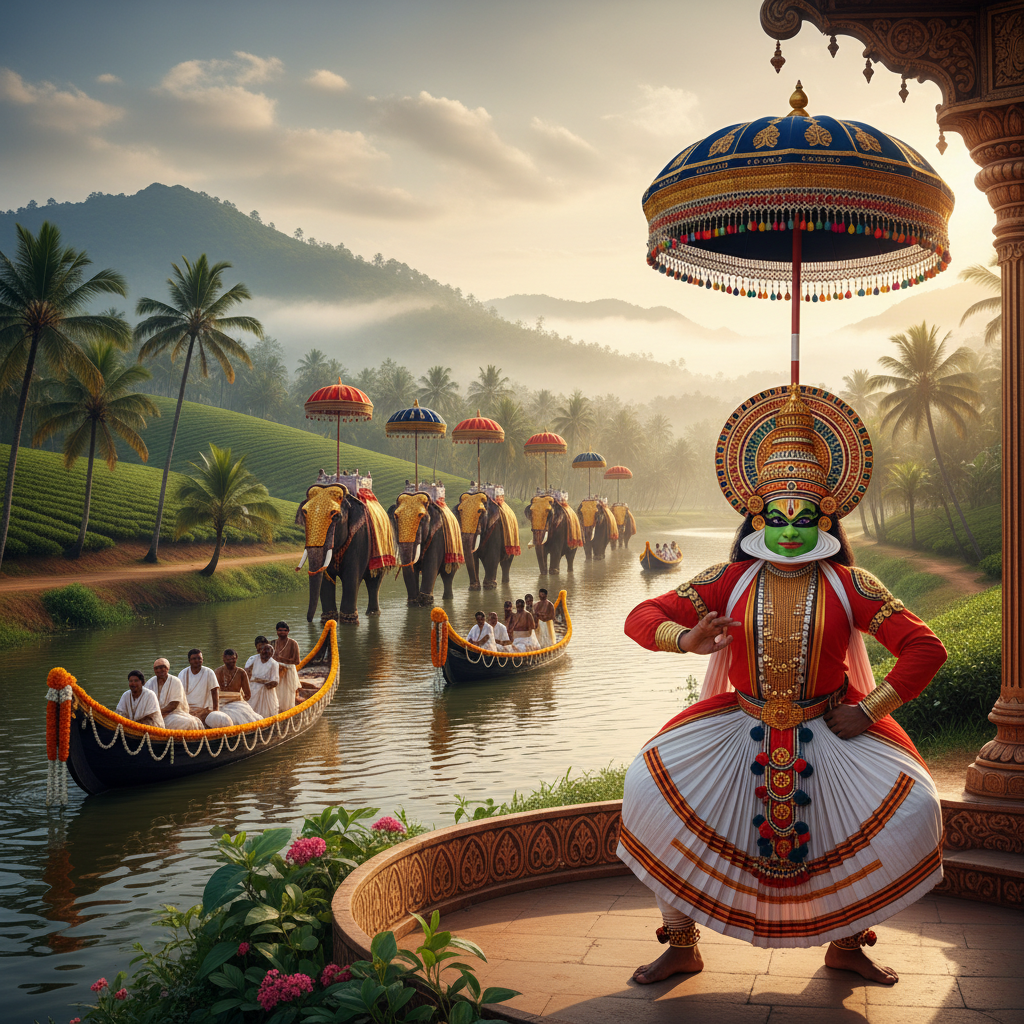
Explore the vibrant world of Kerala's festivals and culture. From the grand Thrissur Pooram to the mystical Theyyam and harvest joy of Onam, experience God's Own Country's year-round celebrations.
Kerala, often referred to as God’s Own Country, is a land where traditions are not just preserved in museums but are lived daily with immense fervor. The cultural tapestry of this narrow coastal strip in South India is woven with threads of diverse religions, ancient art forms, and a deep-rooted connection to nature. To truly understand Kerala, one must dive into its calendar of festivals, which ensures that no matter what time of year you visit, there is always a celebration waiting to welcome you.
The cornerstone of Kerala’s cultural identity is Onam, the state’s harvest festival. Falling in the Malayalam month of Chingam (August-September), Onam transcends religious boundaries and is celebrated by every Malayali household. The legend of the mythical King Mahabali returning to visit his subjects sets the stage for ten days of festivities. From the intricate floral carpets known as Pookalam that adorn doorsteps to the grand feast called the Onam Sadya served on banana leaves, the atmosphere is electric. This is also the season of the famous Snake Boat Races, where massive wooden boats slice through the backwaters to the rhythmic chants of hundreds of rowers, showcasing the state's communal harmony and physical prowess.
As the monsoon clouds recede and the tropical heat sets in, the focus shifts to the majestic temple festivals, specifically the Thrissur Pooram. Held at the Vadakkunnathan Temple in Thrissur during the month of Medam (April-May), it is often described as the mother of all poorams. The sight of thirty caparisoned elephants standing face-to-face amidst a sea of people is breathtaking. The Kudamattom ceremony, where colorful parasols are exchanged atop the elephants to the beat of traditional percussion ensembles like the Panchavadyam and Pandi Melam, is a sensory explosion. The sky eventually lights up with a spectacular display of fireworks, marking the culmination of a festival that defines the grandeur of Kerala’s heritage.
While central Kerala boasts grand processions, the northern region of Malabar offers a more mystical experience through Theyyam. This ancient ritualistic dance-drama is performed in shrines and ancestral homes, primarily between October and May. In Theyyam, the performer is believed to transition into a deity, donning elaborate headgears, vibrant face paints, and heavy ornaments. The fire dances and the rhythmic movements accompanied by local drums create an ethereal atmosphere that blurs the line between the human and the divine. It is a raw, powerful expression of folk culture that has remained unchanged for centuries.
The architectural and artistic brilliance of Kerala is further highlighted through its classical dance forms, most notably Kathakali. Known for its stylized makeup, magnificent costumes, and delicate facial expressions, Kathakali narrates stories from the Indian epics. Watching a performance in the cool evening breeze of a traditional theater or a temple courtyard is an essential Kerala experience. Similarly, Mohiniyattam, the dance of the enchantress, brings a sense of grace and fluidity, echoing the swaying palm trees and gentle waves of the Arabian Sea.
The cultural diversity of Kerala is also evident in its vibrant Christian and Muslim festivals. The feast at the St. George Orthodox Church in Puthuppally or the Edathua Church festival draws thousands of devotees, regardless of their faith. These events are often marked by colorful processions and traditional music. Similarly, the Nercha festivals in mosques across Malabar, such as the Kondotty Nercha, showcase the historical Islamic influence and the syncretic nature of Kerala’s society. These gatherings are not just religious events but community fairs where local crafts and culinary delights take center stage.
Vishu, marking the Malayali New Year in April, brings a message of hope and prosperity. The 'Vishu Kkani'—a ritual arrangement of auspicious items like gold, yellow flowers (Kani Konna), fruits, and grain—is the first thing people see upon waking up, symbolizing a fruitful year ahead. The day is filled with the sound of firecrackers and the joy of 'Vishu Kaineettam', where elders give money to the younger members of the family. It is a reminder of the importance of family bonds and the cyclical nature of time in the Malayali consciousness.
Beyond the specific dates on a calendar, the culture of Kerala is embedded in its daily life. You see it in the traditional white and gold attire (Mundu and Neriyathu), the Ayurvedic healing centers that tap into ancient wellness wisdom, and the spice-scented kitchens that produce world-famous delicacies. The state’s commitment to education and social equality also forms a modern layer of its culture, making it one of the most progressive regions in the country.
Visiting Kerala is an invitation to witness a living heritage. Whether you are standing on the banks of a river watching a boat race, listening to the resonant beat of a drum in a temple, or sharing a meal with a local family, you are participating in a year-round celebration of life. Kerala does not just host festivals; it breathes them, offering every traveler a chance to find their own rhythm in this symphony of traditions. It is a land where the past and present coexist beautifully, ensuring that the spirit of celebration never fades.