A Foodie's Guide to Authentic Kerala Cuisine
· by LiveKerala Editorial
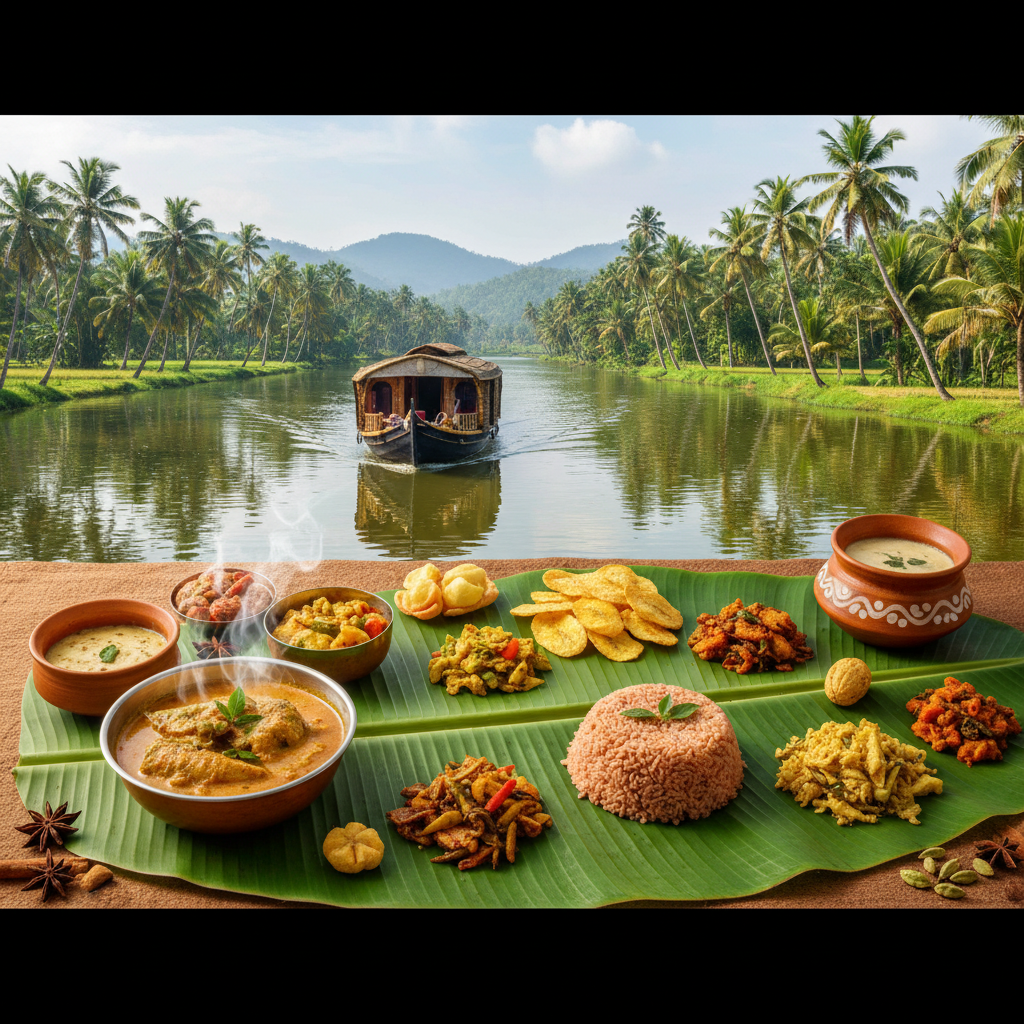
Discover the rich flavors of God's Own Country. From the grand Sadhya feast to spicy Karimeen Pollichathu and Malabar Biryani, here is your ultimate guide to authentic Kerala food.
Kerala, often referred to as God's Own Country, is not just a treat for the eyes with its lush backwaters and misty hills, but also a paradise for the palate. The culinary landscape of Kerala is a fascinating map of its history, geography, and culture. Influenced by centuries of spice trade and a diverse mix of religious traditions, the food here is a vibrant explosion of flavors characterized by the generous use of coconut, curry leaves, mustard seeds, and, of course, a variety of potent spices like black pepper, cardamom, and cloves.
To truly understand authentic Kerala cuisine, one must start with the legendary Sadhya. Often served on a vibrant green banana leaf, the Sadhya is a grand vegetarian feast that captures the essence of Malayali hospitality. It is a balanced symphony of tastes—sweet, sour, spicy, and salty. At the center of the leaf sits a mound of red Matta rice, surrounded by a dozen or more side dishes like Parippu, Sambar, Avial, and Olan. The Avial, a thick mixture of vegetables cooked in a coconut and curd paste, is perhaps the most iconic of them all. No Sadhya is complete without the Payasam, a sweet pudding made of milk or jaggery, which provides a soothing end to the spicy meal.
Moving from the vegetarian feasts to the coastal delights, Kerala’s seafood is unparalleled. Given its long coastline, fish is a staple in almost every household. The Karimeen Pollichathu is a dish every foodie must try at least once. The Pearl Spot fish, native to the backwaters, is marinated in a spicy masala, wrapped tightly in a banana leaf, and grilled. The leaf seals in the moisture and imparts a unique smoky aroma to the fish. Another masterpiece is the Kerala Fish Curry, specifically the 'Kudampuli' (Malabar tamarind) version. The tartness of the dried tamarind combined with the heat of Kashmiri chili creates a deep red, tangy gravy that tastes even better the next day.
One cannot talk about Kerala food without mentioning the Malabar region's contribution, particularly the Thalassery Biryani. Unlike the long-grained Basmati used in other parts of India, this biryani uses a short, thin, fragrant variety of rice called Khaima or Jeerakasala. The meat is cooked separately from the rice and then layered together in a process called 'Dum' cooking. The result is a subtle, aromatic, and less oily biryani that is often garnished with fried onions, raisins, and cashews. While in the Malabar region, one must also seek out Pathiri—a thin rice pancake—paired with a rich, coconut-based chicken curry.
For breakfast, Kerala offers options that are both healthy and incredibly flavorful. The Appam, a fermented rice and coconut milk pancake with a soft, spongy center and crispy edges, is a crowd favorite. It is traditionally paired with Vegetable or Mutton Stew (Ishtu), where the meat and veggies are simmered gently in thick coconut milk with cloves and ginger. Then there is the Puttu—steamed cylinders of ground rice and grated coconut. Usually served with Kadala Curry (black chickpeas in a spicy gravy) and a small yellow banana, it is the ultimate fuel for a day of exploring the state.
Street food and snacks also play a vital role in the Kerala food experience. The humble 'Thattukada' (roadside eatery) is where you find the most authentic flavors. Here, the superstars are the Malabar Parotta and Beef Fry. The Parotta is a flaky, layered flatbread made from refined flour, and when shred and mixed with a spicy, slow-roasted beef (Nadan Erachi Ularthiyathu), it becomes a meal that locals swear by. For those with a sweet tooth, the golden-yellow Pazham Pori (banana fritters) made from ripe Unnakkaya bananas are the perfect accompaniment to a hot cup of cardamom tea during a monsoon afternoon.
The secret to why Kerala food tastes so distinct lies in the ingredients. Coconut is used in every conceivable form—grated, pasted, or as oil. Most traditional dishes are still cooked in heavy-bottomed brass vessels or earthenware pots, which enhance the flavor significantly. Moreover, the spice gardens in the highlands of Wayanad and Idukki ensure that the pepper, cinnamon, and nutmeg used in kitchens are as fresh as they can be.
Exploring Kerala’s cuisine is more than just eating; it is an exploration of the state's soul. From the Syrian Christian kitchens of Kottayam to the Mappila households of Kozhikode and the traditional Namboothiri homes, every community has added a layer of complexity to the menu. Whether you are sitting in a luxury resort or a small shack by the beach, the authenticity remains rooted in the freshness of the produce and the warmth of the people. So, on your next visit to Kerala, make sure to step off the beaten path and let your taste buds lead the way.